
My last piece of 2023, inspired by my childhood history of playing Burnout, Need for Speed, Hot Wheels, and most recently Forza Horizon. It's been a while since I finished a new landscape, but finishing any work of art feels like a victory lap.
Someday on Sunday’s a mundane Monday.
Or someday, you could run away on a runway.
Or someday is just another cookie-cutter cupcake.
A treat just to eat just to appease your tongue’s taste.
Maybe, it is savory. Hearty and chunky
As a meal that you enjoy that can fulfill all your tum’s aches.
But it could never come like sunrays in a subway.
Time and time again we skip the grace of a someday.
Someday is a gift, we can only take it.
Someday is just as meaningful as you want to make it.
-

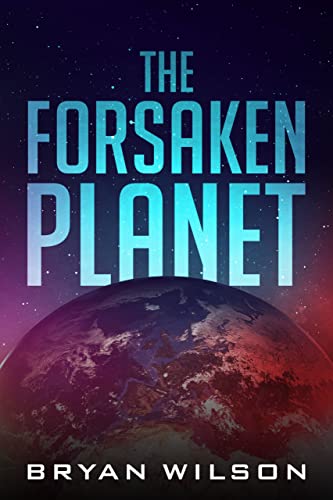
One of the books I beta read for has been published on Amazon!
After an otherworldly entity arrives from the skies and commits death and destruction across the globe; follow young-adult Colton Samson as he enlists in an intergalactic army to wield the power of the stars and save his planet from impending war.
Genres: Science Fiction/Fantasy, Action/Adventure
Here's my review on Goodreads!

Let’s talk about characters! Most importantly, the hero/protagonist who’s going to carry your story.
The hero may be the cornerstone of inspiration for your novel, trilogy, series or whatever your endeavor is with writing. Sometimes that foundation may be built off of a plot device or a worldbuilding device, but if the hero does not shine in your reader’s hearts or memories as they are reading the book, prepare for the book to miss its target when it hits shelves and reviews.
Readers generally want a hero who is: smart, imperfect, and 3-dimensional.
Let’s address each point. I’m going to start with imperfect first.

I finished reading Machinehood! Though I'm a little late to the party, if you want to read a cerebral AI techno-thriller with a strong military slant, this book is for you. Below is my full review, at Goodreads!
https://www.goodreads.com/review

Continuing on the themes of starting out with an idea, I think it’s going to nourish your inspiration and exercise your brain if we have a little talk about Originality. I’ve gotten into numerous debates with creators about the definition and application about this word, so first I’m going to encourage you.
BE ORIGINAL. Make sure that at the end of the day you can cast your proud signature on your masterpiece with the complete knowledge that it is utterly yours, something researched, developed, manufactured and strategized in your brain.
Now I’m going to shed some light on the subject.
Let’s define originality first, shall we?
The top Google definition result for originality defines it as: “the ability to think independently and creatively” OR, “the quality of being novel or unusual.” Dictionary.com, Cambridge, Vocabulary.com, and Merriam Webster all express this definition in a similar way: A quality, a power, or a trait. But…uh oh. Macmillan takes it farther by saying “the quality of being new, interesting, and different from anything that anyone has created before”.
So herein lies the debate. We have a divide between a relative and absolute interpretation of the word.
Macmillan Dictionary, as well as a large population of artists, writers and the general public, argue that originality is only applied in the absolute context. It is only a yes or no. All or nothing. This means that if one iota of your manuscript is derived from something else, even if it’s lavished with groundbreaking territory, it is not original.
But consider this, almost none of the adjectives we use in the English language convey an absolute purity or coherence to its word. You can call a movie “good” even if it has some improvable spots. You can call a sundae “sweet” even if it has some chopped walnuts. You can call your day “hectic” if the first 30 minutes was mellow, and You can call a shirt “red” even if the hue isn’t R: 255 G: 0 B:0. See? In the same way, content doesn’t need to be perfectly original to be original.
Consider I want to paint an “original” concept. I’ll paint a horse. Been done a million times before. Let’s make it a blaring red-orange Pegasus whose coat was made of fire. On top of that, let me paint some tortured and wounded farmers who were attacked by said Pegasus for their unethical treatment of animals.
See what I did there? Have you heard of an equestrian incarnation of a Phoenix who served as a vigilante to exact justice on abused farm animals everywhere?
Though if you broke up the parts of the concept: Horse, Phoenix, Vigilante, some may say it isn’t “original” because I didn’t invent any of those concepts. But the combination certainly has not been conceived or illustrated by the vast vast majority of the population.
THIS, here is originality. And with continuing your train of thought and letting your imagination run wild, you can take a very very simplistic concept and transform it into something marvelously original over time. So keep writing and keep scheming!
This for me is one of the quintessential and personal favorites of techno trance songs. Its classic club production is soon contrasted by a more meditative melody which underscores the tragedy that inspired it. Energetic synths meet an emotionally haunting piano both of which demand your attention. And the result is a piece that feels profound and hopeful.

This is Pulse Temple. Where the indigenous people emphasize the strength of the heartbeat, and the power of music. Here, we are all humans, no matter what country or race, or social class, or background or family, but we're all connected by a pulse.
Last week, the post on Beginning a Book began with a brief discussion bout Hooks.
Let's say your plot cannot begin with that exciting climactic material that would be the textbook-definition of a 'hooky' opening. What do you do to make a solid beginning?
Take a Snapshot
Let's say your book features some of the most mundane characters ever, living a (seemingly) ordinary life. The most cliche thing you can do is open your book with an introduction of themselves, waking up to an alarm clock, or looking in a mirror. Why? Because it draws attention to itself. What do these things have in common? These scenes are beginnings of themselves. Nothing screams "I'm beginning a book" than with beginning with someone's first day at a new school.
So take a snapshot. Since these characters had lived years of life up until this plotline, act like they had a life before and are not simply coming into existence when you first started writing them. Starting the book by jumping right in the middle of their commute to work, a conversation at dinner, dance recital, etc. Pay close attention to the little things, like the specific way the character likes to order Chinese food, or the dislike they have for holiday decorations. Point out the fine details and contemplation that only your character would point out. Make it sound like the reader interrupted your character's life at a random, inopportune and personal time--and not at a self-aware beginning. Still has the effect of a fast-pace with Lights, Camera, and Action on your first words.
Paint a Picture
No book can happen without a setting, everything has to happen somewhere. So sometimes your setting should get a glimpse of the spotlight. Think about a cozy mystery that paints the picture of that old-fashioned roadside diner whose neon lights glimmer against the rain-splashed roadway just past midnight, where inside the detective orders a reliable cup of coffee brewed just the way he likes it. Let the reader glide into the scenery of your world with some establishing shots.
Meditate
The opening of the book is where you can devote some space to ruminate about the underlying messages and themes about your book without being intrusive to the plot. Open with a couple of truths and/or a couple of questions to set the tone about what challenges or boundaries your character may have to overcome (but do this gingerly and subtly). Maybe in the process you redefine what is constituted as normal in your universe. But only give them a taste. You want to lure them in a way that provokes curiosity, you don't want to show them your full deck of cards. This approach can be much like having a narration at the beginning (cue Morgan Freeman voice).
So here are three different angles you can use to attack "boring" beginnings with, using 3 different foci: your character, your setting, or your message. You may even be able to marry all three of these into a whole chapter.
And for additional inspiration, you're probably watching shows & movies on your favorite streaming device, you're also watching beginnings on a regular basis. So remember: Write it Like You'll Watch It!
